
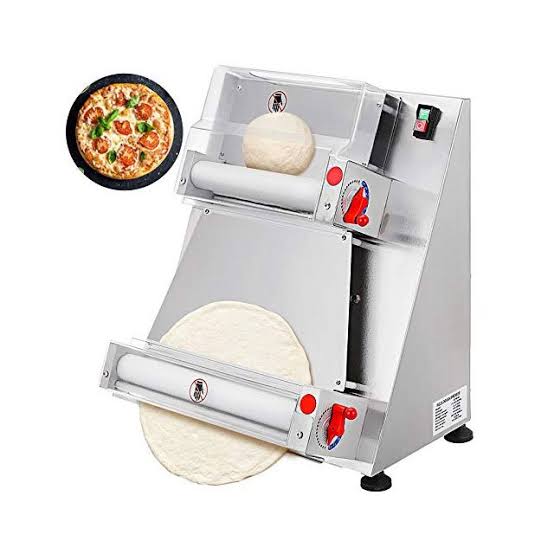
Dough Machine For Pizza 2026: Prices, Types, Features & Buying Guide
Great pizza starts with well-made dough. Flour, water, yeast, salt, and oil need to be mixed evenly, then kneaded enough to build a smooth, elastic gluten structure. For homes, bakeries, cafés, restaurants, and pizzerias, doing every batch by hand can become slow and inconsistent.

A Dough Machine For Pizza reduces repetitive work and makes batch control easier. The right machine can improve consistency, save preparation time, and support higher output. This 2026 guide covers machine types, capacity, current prices, buying features, common mistakes, and practical selection tips.
What Is a Dough Machine For Pizza?
A Dough Machine For Pizza is a mixer or kneader that combines pizza ingredients into workable dough while developing gluten through repeated mixing and folding.
A Pizza Dough Machine used for mixing is not the same as a dough press or sheeter. A mixer prepares the dough; a press or sheeter generally shapes or flattens it afterward.
Home users may only need a compact kneader. A busy pizzeria usually needs more torque, higher dough capacity, stronger construction, and a machine designed for repeated batches.
Why Use a Machine for Making Pizza Dough?
A Dough Machine For Pizza helps make production more predictable. Manual kneading can work for small batches, but it becomes harder to repeat the same mixing time, dough texture, and batch size as volume increases.
Faster Dough Preparation
Automation cuts hands-on kneading time, allowing staff to focus on toppings, orders, cleaning, and other kitchen work.
Consistent Dough Texture
Repeatable mixing helps distribute ingredients evenly and gives operators better control over gluten development from one batch to the next.
Reduced Labour
A Pizza Dough Mixer lowers the physical effort of repeated hand kneading, which matters in pizzerias, cafés, bakeries, and catering kitchens.
Better Production Capacity
Commercial mixers can handle much larger batches than most people can knead comfortably by hand. Industry guidance recommends sizing by finished dough weight, hydration, and peak demand rather than bowl volume alone.
Types of Dough Machines for Pizza
Spiral Dough Mixer
A spiral mixer is one of the best choices for dedicated pizza and bread production. A spiral hook works with a rotating bowl to stretch and fold dough efficiently. Current foodservice guidance identifies spiral mixers as particularly suitable for repeated pizza-dough production.
Planetary Dough Mixer
A planetary mixer uses an attachment that rotates around a stationary bowl. Its advantage is versatility: with different attachments, it can handle dough, batters, creams, sauces, and other prep.
Automatic Dough Kneader
Compact automatic kneaders suit homes and smaller food businesses that want straightforward mixing without the footprint or price of a large commercial spiral unit. Brothers Home currently positions its kneaders for roti, naan, bread, and pizza preparation.
Commercial Pizza Dough Mixer
Commercial units are designed for frequent use and larger batches. Depending on the model, they may offer two speeds, timers, stronger motors, safety guards, and stainless-steel bowls. Current 2026 listings range from compact units to high-capacity floor machines.
Pizza Dough Sheeter
A sheeter does not replace kneading. It is normally used after dough preparation to flatten portions to a more consistent thickness.
Home vs Commercial Dough Machine For Pizza
| Feature | Home Machine | Commercial Machine |
| Capacity | Small batches | Medium to large batches |
| Motor | Light/medium duty | Heavy duty |
| Usage | Occasional or daily home use | Frequent, repeated production |
| Size | Compact | Countertop or floor model |
| Cost | Lower | Higher |
| Best for | Families/home bakers | Pizzerias, bakeries, restaurants |
A home Dough Machine For Pizza should be easy to store, operate, and clean. A commercial buyer should focus more on finished-dough capacity, motor torque, duty cycle, safety, service support, and peak-hour output.
Important Features to Consider Before Buying
Dough Capacity
Check the stated dough capacity, not only bowl litres or quarts. Dense dough can place a heavy load on a motor, and safe capacity can vary with recipe hydration. Industry guidance warns that bowl volume alone does not show how much pizza dough a mixer can process.
Motor Power
Pizza dough can be stiff. A properly sized motor and good torque help the machine knead without excessive strain, especially during repeated commercial batches.
Mixing Speed
Multiple speeds can give better control over ingredient incorporation and dough development. Purpose-built pizza mixers often focus on lower speeds because dense dough does not need high whipping speeds.
Stainless-Steel Bowl and Dough Hook
Durable food-contact parts improve hygiene and simplify cleaning. The hook should move dough efficiently through the bowl rather than merely spin it around.
Safety and Stability
Look for a stable frame, bowl guard, overload protection, secure controls, and clear instructions where applicable. Never bypass safety guards while a mixer is running.
Cleaning and Maintenance
Choose a machine with easy access to the bowl, hook, lid, and food-contact surfaces. Local spare parts and after-sales support also matter for long-term ownership.
Dough Machine For Pizza Price in 2026
There is no single global price because capacity and construction vary widely. As of September 11, 2026, the Brothers Home target page lists the Classic BH-007 at PKR 12,000, Galaxy GH-007 at PKR 12,000, BH-009 at PKR 15,200, and Brothers Dough Kneader at PKR 16,500. Buyers should confirm the live page because prices can change.
At the commercial end, current spiral-mixer listings show examples around US$1,249 for a 30-quart/42-lb unit, while much larger models can cost several thousand dollars and approach US$10,000.
The price of a Dough Machine For Pizza depends on capacity, motor size, controls, materials, duty level, brand, warranty, and local support.
How to Use a Pizza Dough Machine
- Measure ingredients accurately. Weigh flour, water, yeast, salt, oil, and other ingredients.
- Load them correctly. Follow the manufacturer’s recommended ingredient order.
- Start at the recommended speed. Begin gently if the recipe or machine requires it.
- Knead until properly developed. Watch the dough rather than relying only on time.
- Check texture and temperature. The dough should be smooth and elastic without overheating.
- Rest and ferment. Remove the dough and follow the recipe’s fermentation schedule.
For commercial kitchens, recording ingredient weights, mixing time, batch size, and dough temperature makes troubleshooting easier.
Common Mistakes When Using a Pizza Dough Mixer
Overloading is one of the biggest mistakes. A large-looking bowl may still have a lower safe capacity for stiff dough. Always follow the manufacturer’s rating.
Other problems include adding too much or too little water, using the wrong speed, over-kneading, under-kneading, ignoring dough temperature, and delaying cleaning. A dependable Pizza Dough Maker Machine still needs correct operation and routine care.
Who Should Buy a Dough Machine For Pizza?
A Dough Machine For Pizza is useful when manual kneading becomes a bottleneck. It suits pizzerias, bakeries, cafés, hotels, caterers, cloud kitchens, canteens, and serious home pizza makers.
Small businesses do not automatically need a large floor mixer. A compact kneader can be more economical for modest output, while high-volume kitchens should size equipment around peak production.
How to Choose the Best Dough Machine For Pizza
Start with the busiest service period. Estimate how many kilograms of finished dough are needed, then calculate the required batch size and number of mixes.
Check maximum dough capacity, motor quality, bowl material, machine dimensions, voltage, speed settings, warranty, spare parts, cleaning access, and technical support. If the kitchen also prepares batters, creams, and sauces, a planetary mixer may be more practical. If pizza and bread dominate production, a spiral mixer deserves serious consideration.
The best Dough Machine For Pizza is not automatically the biggest one. It should match the recipe, production volume, available space, electrical supply, staff workflow, and service network.
For buyers in Pakistan, Brothers Home currently lists several compact kneaders plus replacement parts, which can be useful for home and small-business users focused on local serviceability.
Frequently Asked Questions
1. Is a pizza dough machine better than hand kneading?
For frequent or larger batches, it usually saves effort and makes mixing time and batch size easier to repeat. Hand kneading still works well for small batches and recipe testing.
2. Is a spiral mixer best for pizza dough?
For dedicated pizza production, spiral mixers are often the stronger fit because their mixing action is designed for dough. Planetary mixers are more versatile when the kitchen also needs whipping, beating, sauces, or batters.
3. How much mixer capacity does a pizza shop need?
Size the machine from peak finished-dough demand, recipe hydration, and the manufacturer’s rated dough load. Do not rely on bowl volume alone.
4. Can an atta kneader make pizza dough?
Yes, provided the machine is suitable for the recipe and batch size. Brothers Home states that its kneaders can prepare pizza as well as roti, naan, and bread dough.
5. What is the difference between a dough mixer and a sheeter?
A mixer combines and kneads ingredients to develop dough. A sheeter works later to flatten or shape prepared dough to a controlled thickness.
Leave a Reply